









Nobel Prize Winner: Don’t count humanity out just yet
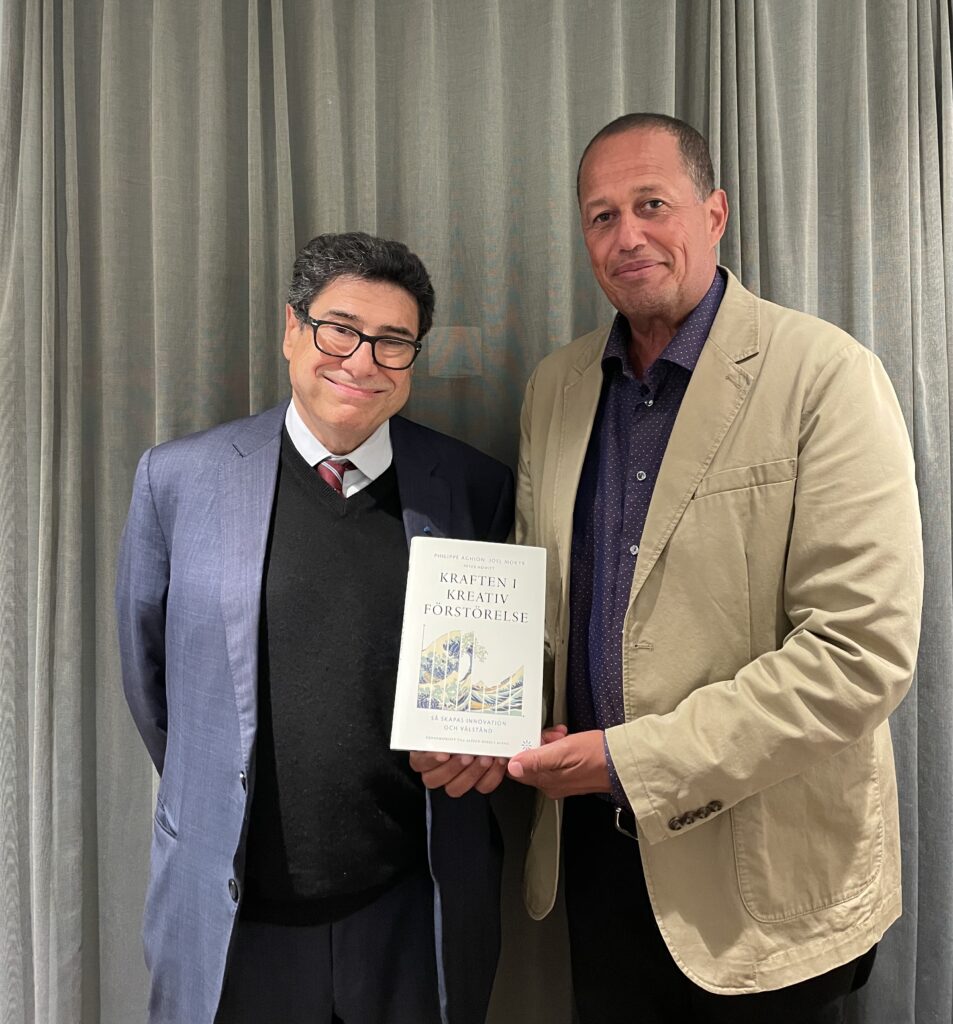
COLUMN: AI will eliminate jobs. But that does not necessarily mean mass unemployment. Nobel Prize laureate Philippe Aghion sees a technology that could instead boost productivity, create new markets and give rise to entirely new professions.
AI is often portrayed as a threat to everyone from programmers and economists to lawyers and administrators. But Philippe Aghion, who received the 2025 The Swedish Central Bank Prize in Economic Sciences in Memory of Alfred Nobel, jointly with Joel Mokyr and Peter Howitt, takes a more nuanced view of what lies ahead.
His research explores how innovation drives economic growth through what is known as “creative destruction”. New technologies and companies displace old ones, but they also create the conditions for new businesses and jobs to emerge.
When Aghion is asked whether AI will accelerate this process, his answer is clear.
“Yes, absolutely,” he says.
But he stresses that technology will not simply destroy jobs.
“There will be more job destruction, but also job creation through AI.”
Higher productivity can create more jobs
The logic is that AI does not simply replace human labour. It can also make companies more productive, reduce costs and help them grow.
When businesses can produce more and compete in new markets, demand can increase. This, in turn, can create a need for more employees. New products and services can also give rise to professions that do not exist today.
This does not mean that everyone who loses a job will automatically find a new one. But from Aghion’s perspective, it is a mistake to focus only on the jobs that disappear while ignoring those that may emerge.
The fear that new technology will eliminate jobs is nothing new.
As far back as the 16th century, English inventor William Lee faced resistance when he sought support for his knitting machine. One argument was that the technology could threaten people’s livelihoods. During the Luddite uprisings in the early 19th century, workers destroyed machines they believed threatened their professions.
History shows that technological progress can create major conflicts in the labour market. However, it does not prove that every new technology automatically leads to more jobs, or that the transition will be painless.
Denmark shows the way when jobs disappear
For Aghion, the question is therefore not only what technology is being developed, but also how society manages its consequences.
He highlights the Danish flexicurity model, which combines a flexible labour market with financial security and support for people who need to find new jobs.
The idea is to allow companies to adapt as circumstances change, while ensuring that people receive help getting back into employment.
This is central to Aghion’s argument. Trying to preserve every existing job can slow progress. But leaving people without support risks making the technological transition far more difficult, both socially and politically.
Education and skills development are therefore essential. Human judgement and the ability to understand nuance are becoming increasingly important. One example is AI giant Anthropic, which is looking for a writer and reportedly offering a salary of SEK 3.4 million for the role.
He doesn’t want AI to take over schools
Aghion sees enormous opportunities in AI, but does not believe the technology should replace fundamental learning in schools.
Children must first learn to read, write, do maths, concentrate and solve problems independently. Only then should AI be introduced as a more advanced tool.
Schools also need to develop qualities such as initiative, collaboration and flexibility skills that will become increasingly important as tasks and professional roles change.
At the same time, certain practical professions may remain relatively resilient as AI transforms the labour market. Aghion points to skilled chefs and plumbers as examples of occupations where human expertise and hands-on work may be harder to replace.
He highlights Switzerland as an interesting example of how vocational education can create pathways to skilled employment and continued professional development throughout working life.
Education can therefore no longer be seen as something that ends when we leave school. As technology changes, people’s skills must evolve too.
Aghion’s warning: Europe must wake up
Aghion sees the greatest risk not necessarily in AI itself, but in Europe’s failure to turn new technology into innovation and economic growth.
The United States and China are investing heavily in technological development. China has strengthened its position in several advanced industries in a relatively short time, including electric vehicles.
Aghion describes the Chinese as “hungry for innovation. Europe must wake up.”
According to his argument, the continent needs better conditions for innovation, more venture capital and long-term investment in research. It also needs a culture in which companies and researchers can fail without that failure marking the end of the journey.
Aghion describes himself as a fighting optimist. He does not expect technology to solve every problem on its own. But he believes in the possibility of generating growth through continued innovation.
AI will most likely transform the labour market fundamentally. Some professions will shrink, others will grow, and entirely new ones will emerge. The outcome will depend not only on what technology can do, but also on how businesses, education systems and policymakers respond.
Text: Stefan Engeseth. Originally published in Swedish by Dagens PS on 23 October 2026. English translation by AI.